
"You might have a lot of pictures on your wall... but you never really taste it" - Steve Jobs, on consultants
Inspired by that idea, I try to feel the practical weight of each project: the imperfect information, competing priorities, and consequences that come with making technical decisions real.
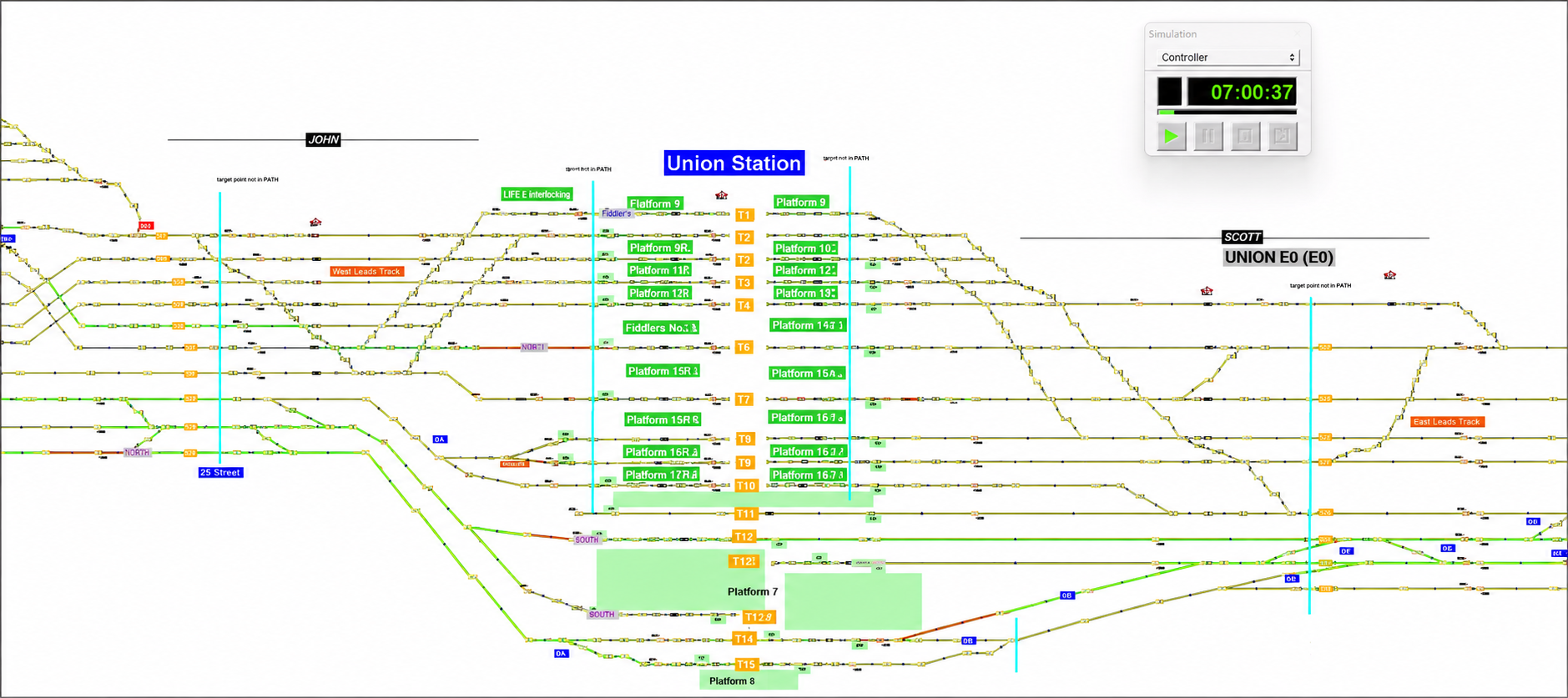
GO Rail Expansion Service Planning
Long-term service planning for Toronto's major regional rail expansion, connecting future service levels with fleet, roster, storage, track, signalling, and staging constraints. The work centered on a very practical question: what combination of infrastructure would it take to operate the service people desire?
Objective
Translate an ambitious regional rail expansion vision into service plans that could survive real operating constraints: timetable structure, fleet and roster needs, storage, track capacity, signalling, and staging.
Challenge
The difficult part was not producing a timetable in isolation. The value was connecting many moving pieces, including service objectives, infrastructure limits, rolling stock assumptions, stakeholder requirements, and downstream design implications, into one coherent operating story.
Lessons learned
Deadheading movements are easily overlooked in service planning, but they can have big implications for fleet and roster needs, storage, and operational complexity! On the already busy segments of the GO train network, there could be more trips in the contra-peak direction due to deadheading movements.
Unique approach
Brought operational constraints and stakeholder requirements into the service planning process early, then tested the assumptions incrementally through desktop analysis before moving into detailed simulation.
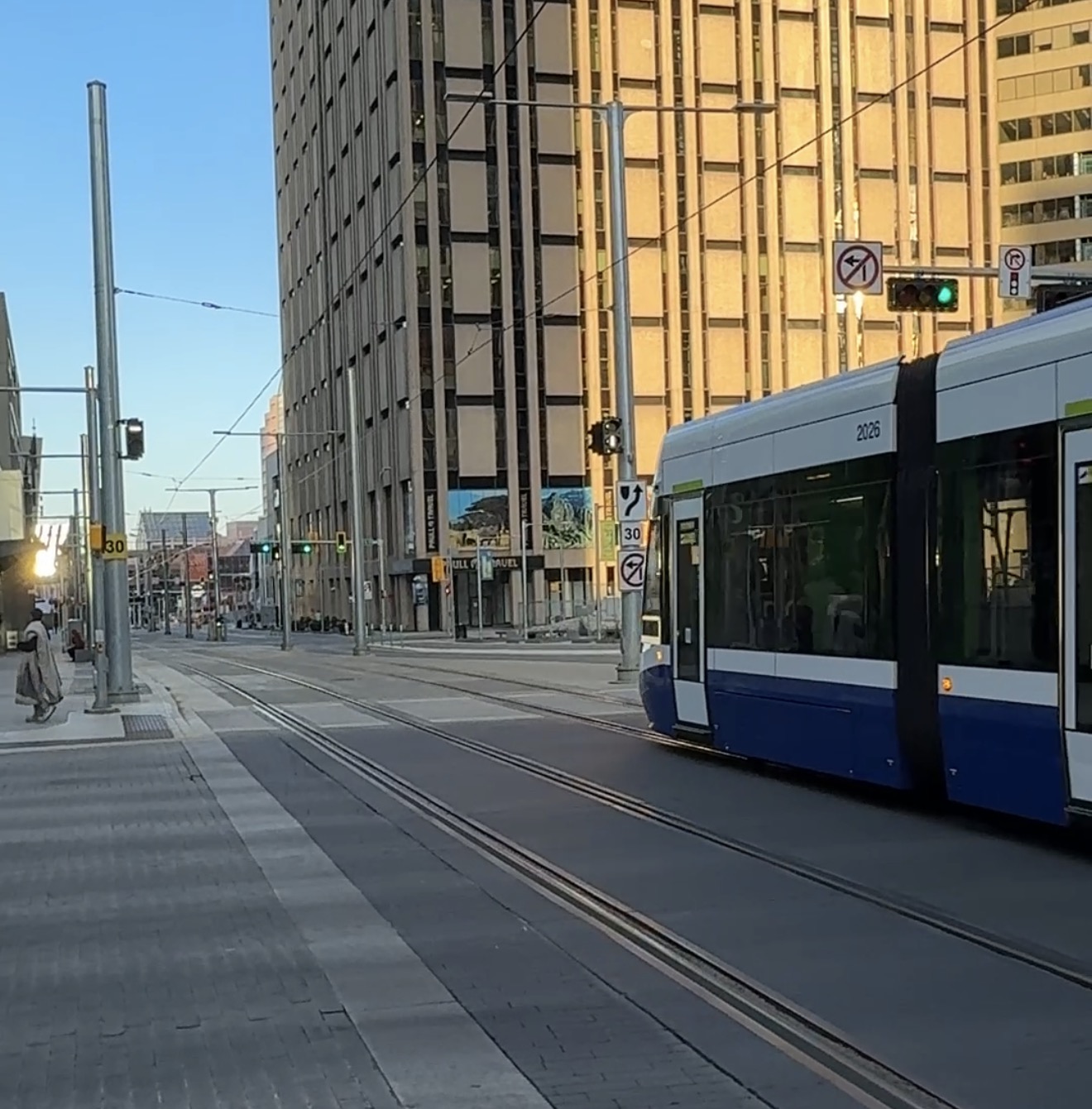
Edmonton Valley Line LRT Traffic Signal Operations
Traffic signal and pre-emption for the Valley Line LRT corridor. The traffic signal design needed to prioritize LRT progression while also minimizing impacts on every other movement. It required careful design of the detailed signal operation logic and a lot of testing both virtually and in the field.
Objective
At-grade LRT corridors need signal operations that balance transit priority, traffic performance, safety, and constructability across many intersections and crossings.
Challenge
Rail and traffic are typically two separate teams, but transit signal priority at traffic intersections requires careful coordination.
Lessons learned
Traffic controllers are often not as sophisticated as we wish they were. Sometimes the simpler design is the more reliable option, and possibly more efficient for both traffic and transit progression!
Unique approach
Combined traffic simulation software with actual Econolite-supplied virtual controller to emulate real-world behaviour.
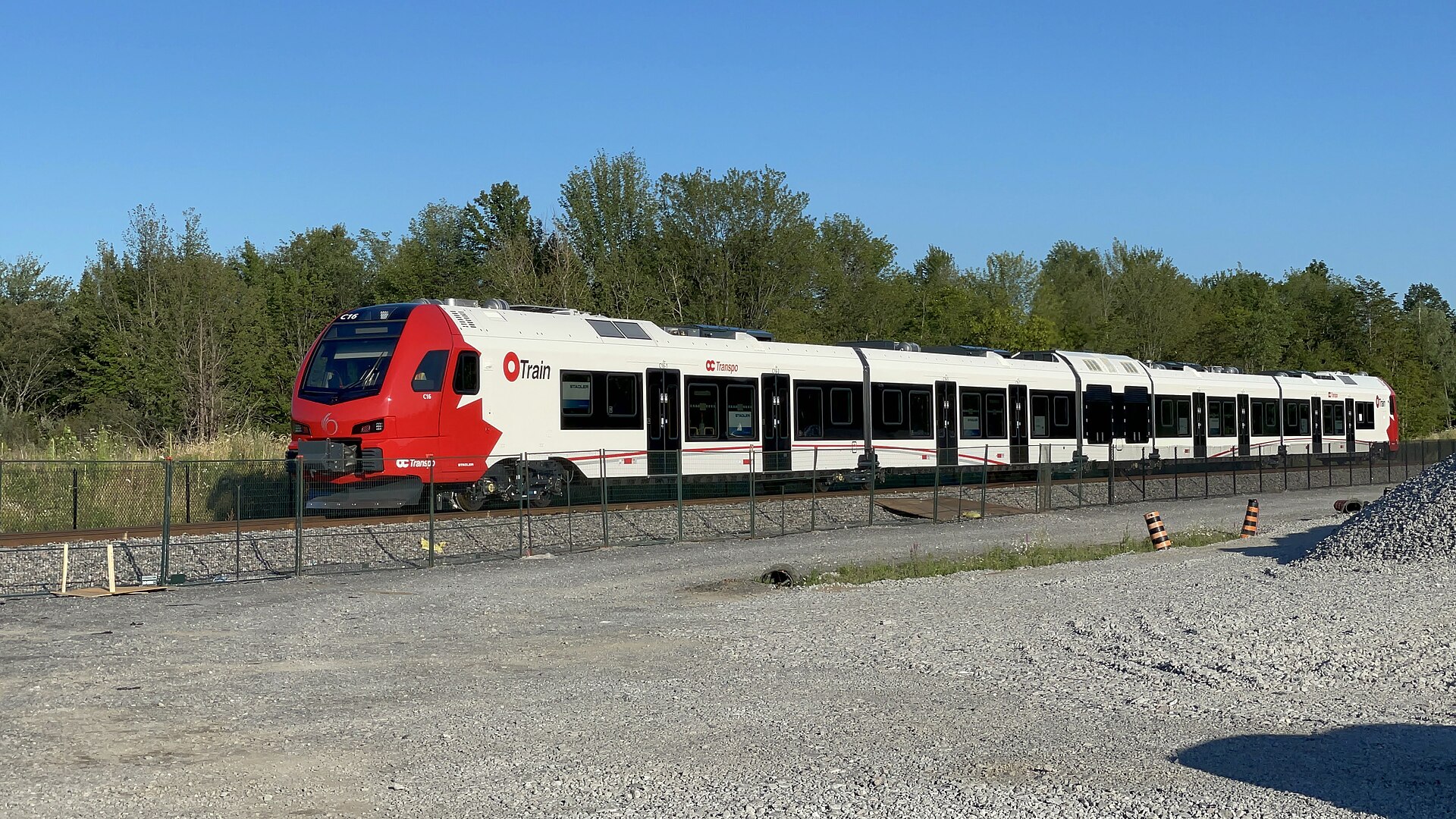
Trillium Line Operations and Pedestrian Circulation
Operations planning and pedestrian circulation support for the rail extension. The work tested whether proposed service patterns and station layouts would hold up, particularly to facilitate the timed transfer between the airport branch and the main line.
Objective
Support technical review of proposed operations and station concepts by testing how service assumptions, passenger flows, and station layouts would perform together.
Challenge
The transfer station is intended to operate with timed transfer of passengers between the airport branch and the main branch. This requires careful coordination of service patterns and station design.
Lessons learned
Operations planning and simulation are intended to guide design decisions, not just validate them. By testing how different service patterns and station layouts would perform together, we were able to identify potential issues and opportunities for improvement earlier in the design process.
Unique approach
The simulation results were projected onto web pages that allowed the project team to explore how different service patterns, station layouts, and demand assumptions would impact passenger movement and station performance. This helped make the technical review more interactive and accessible to non-technical stakeholders.
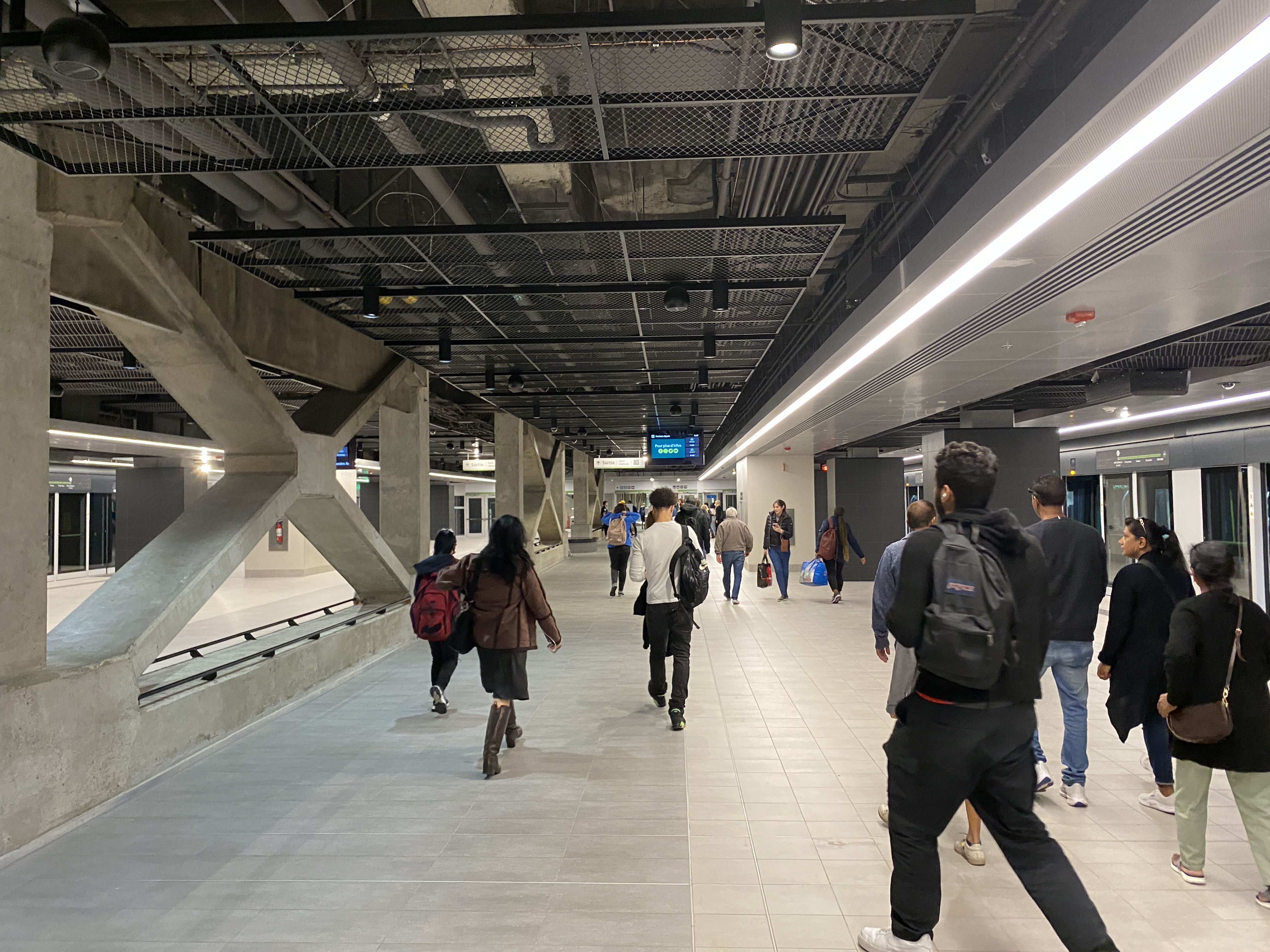
Montreal REM Station Design and Pedestrian Circulation
Pedestrian circulation and emergency egress analysis for REM stations as station layouts progressed through the various design stages. The work tested whether platforms, elevators, faregates, stairs, and transfer paths could handle demand in practice.
Objective
Test whether proposed station layouts and passenger circulation assumptions could support expected demand, transfers, boarding, alighting, and emergency egress without creating avoidable bottlenecks.
Challenge
Several stations are constrained by their physical layout, such as McGill Station's constrained platform boundary and Edouard-Montpetit Station's high-speed elevator capacity.
Lessons learned
Wait time and capacity do not grow proportionally! Adding 25% more capacity does not reduce wait time by 25%; it can reduce wait time by 50% or more, especially for high-demand stations.
Unique approach
Although the simulation software used was capable of modelling elevators and faregates at the time, many custom scripts had to be developed to make the software's outputs more useful for station design decisions, such as identifying bottlenecks, calculating wait times, and testing different demand scenarios.
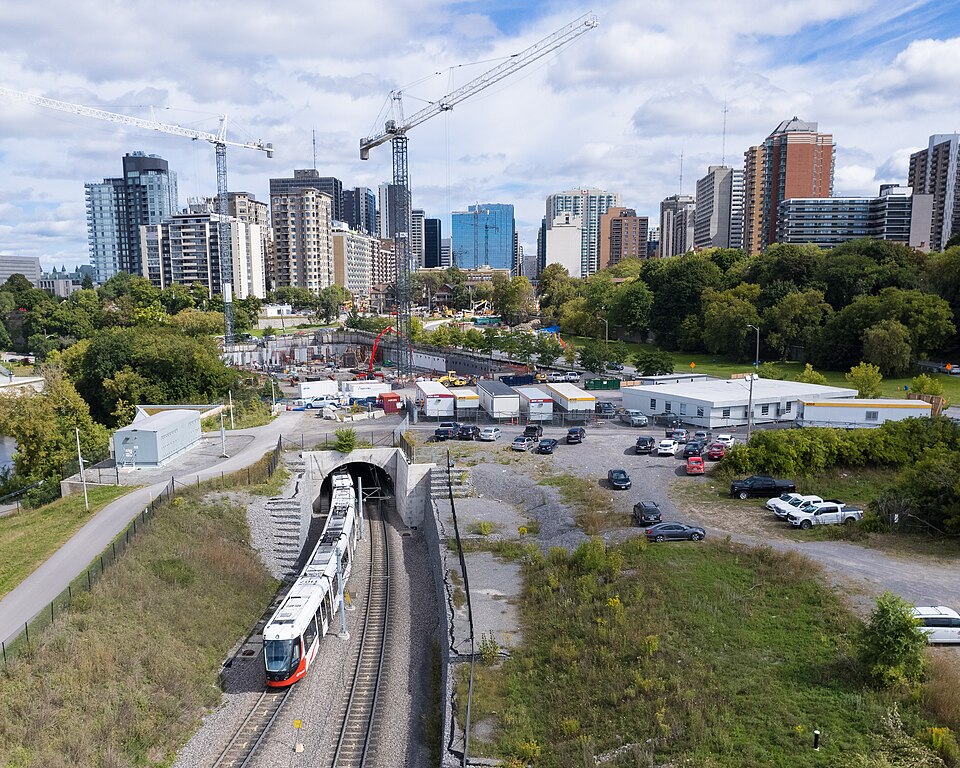
Ottawa LRT Confederation Line Extension
Early operations planning support for an LRT extension. The work helped test whether the proposed infrastructure could support the intended operation, especially around junctions, termini, yard access, and fleet size.
Objective
Support early operational validation for an LRT extension by testing how proposed service patterns interacted with infrastructure, stations, CBTC signaling, fleet assumptions, and service requirements.
Challenge
The work required translating design information into an operations planning view: understanding how the proposed line would be used in service, identifying potential constraints, and testing whether the assumed operating patterns were reasonable.
Lessons learned
In CBTC operation, the main line is less likely to be the bottleneck. Make sure the junction, the terminus, and the yard access work!
Unique approach
Developed custom spreadsheet capable of automatically generating timetables for the simulation model customized to each infrastructure design.
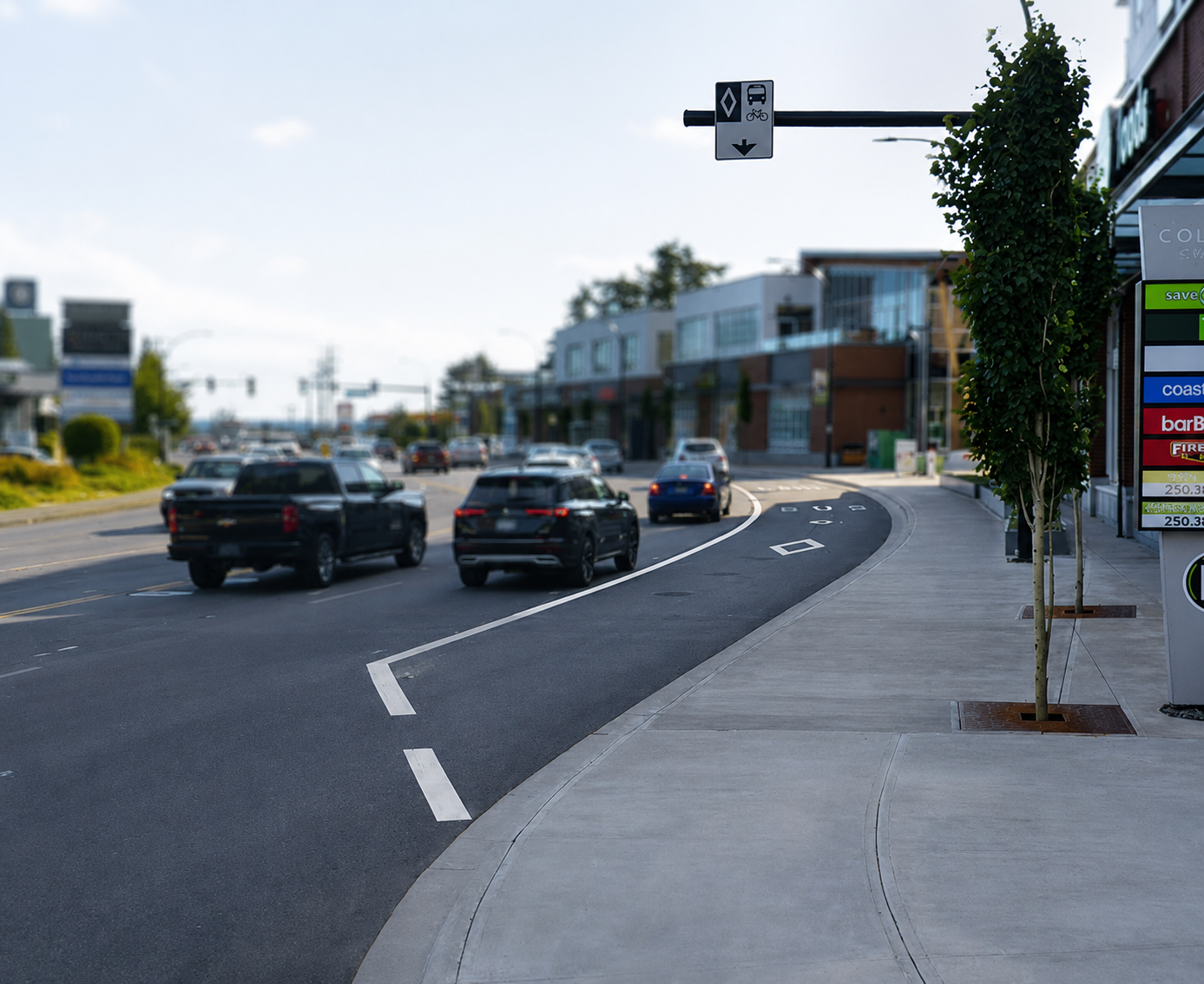
Island Highway Transit Priority
Transit priority study for the Island Highway / Sooke Road corridor, focused on improving bus speed and reliability in a constrained arterial environment.
Objective
This section of the corridor is a key transit route with high ridership, but buses were often delayed by traffic congestion, signal timing, and other factors. The goal was to identify and rank cost-effective transit priority measures that could improve bus speed and reliability.
Challenge
The corridor had a major downstream congestion source: merging onto Highway 1. So we had to be careful that we were isolating the delay due to traffic backing up from the highway, and not just delay due to signal timing or bus stop spacing. We also had to be mindful that when other projects on Highway 1 are completed, they may change the traffic patterns and congestion levels on the corridor, which could impact the effectiveness of the proposed transit priority measures.
Lessons learned
If queue jump lanes are too short, the buses can't jump the queue effectively. If the queue jump lanes are too long, they are wasteful and affect adjacent traffic. The optimal length of a queue jump lane needs to be carefully determined per intersection, and is often made more complex due to local characteristics such as bike lanes, right turn traffic, bus stop locations, etc.
Unique approach
Used VISSIM with custom scripts to emulate the combined effect of queue jump lanes and transit signal priority.
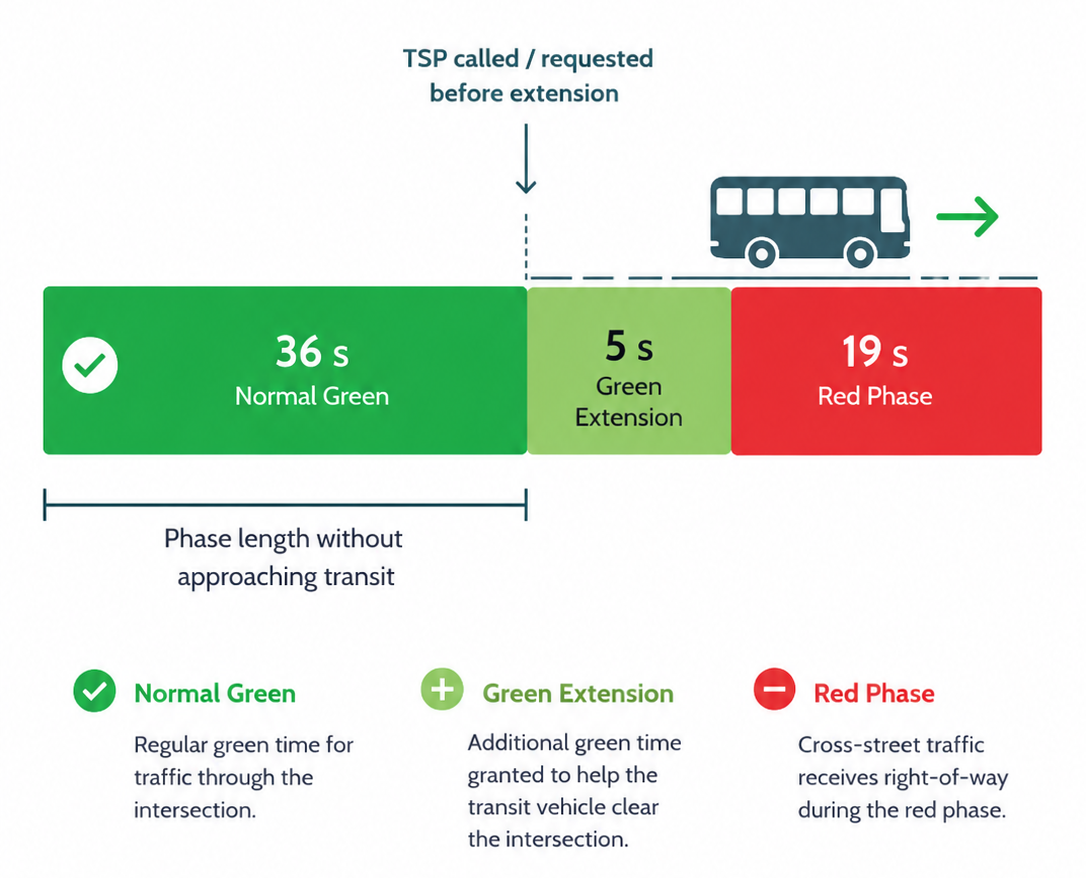
TransLink Transit Signal Priority Framework
Technical framework support for future transit signal priority planning and deployment across TransLink's network. The work looked at how TSP could be planned across municipalities with different equipment, ownership boundaries, maintenance practices, and readiness for network-wide implementation.
Objective
Support TransLink in developing a clear framework for the overall architecture and priority of transit signal priority, so that future investment decisions are aligned with the direction of transit signal priority being envisioned.
Challenge
Traffic signals are maintained by the individual municipalities, which are independent from TransLink. This creates many challenges in coordination, operability, and ownership. Different municipalities typically have different equipment, some of which support TSP well and some don't. This requires careful planning for TransLink in terms of where to invest in TSP, while remaining future-proofed for interoperable fleet and network-wide TSP deployment.
Lessons learned
Consult the maintenance teams early and often! We often focus on street-level benefits and challenges, but the maintenance teams are the ones who have to live with the day-to-day reality.
Unique approach
Carefully studied the existing maintenance practices across the transit centres and the inventory assets of the municipalities, before developing any TSP architecture.
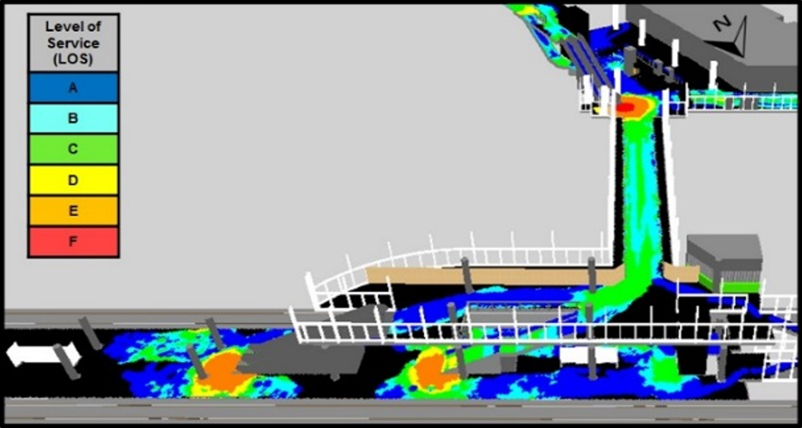
Commercial Broadway Station New Platform Expansion
Pedestrian circulation and egress analysis for the Commercial-Broadway station platform expansion. The new platform would change how passengers moved through one of the busiest stations in the network, so the analysis tested platform sizing, faregates, stairs, escalators, cross-flows, and emergency egress.
Objective
Support the design of a new station platform by testing whether the proposed platform, vertical circulation, and passenger movement areas were adequately sized for expected demand and emergency egress requirements.
Challenge
Commercial Broadway station is one of the busiest stations in the TransLink network, with significant transfer volumes due to its location at the intersection of two SkyTrain lines and the 99 B-Line. There are a lot of cross-flows, making circulation complex to manage.
Lessons learned
Usually the exit direction should have much higher capacity than the entry direction, whether it's faregates, stairs, or escalators. Boarding passengers usually arrive uniformly over time, while alighting passengers often arrive in surges. Additionally, we have to account for emergency egress, when everyone is exiting the station!
Unique approach
Conducted site visits to verify various key metrics such as clearance time, waiting queues, cross-flow patterns.